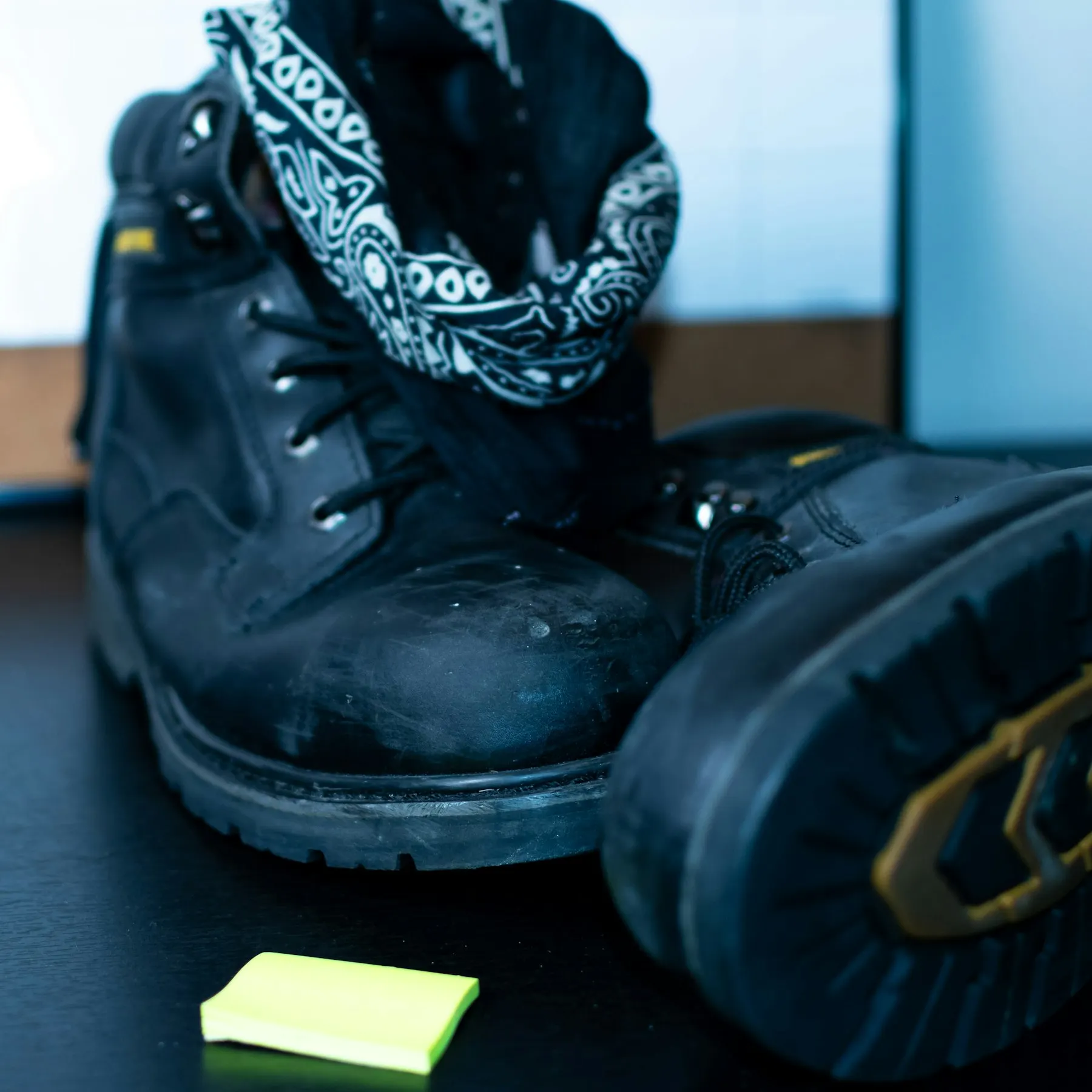
Safety footwear is work footwear built to protect feet from falling objects, crushing, punctures, slips and other hazards. It includes safety boots, safety shoes, trainers and rubber boots with protective toe caps. In Europe, safety footwear is tested to EN ISO 20345. In the US, it is tested to ASTM F2413. The markings on each pair tell you exactly what it protects against.
Choosing the right site safety footwear starts with the hazard, not the look.
Main Types of Safety Footwear
- Safety boots: ankle-high or higher, good for construction, logistics and outdoor sites
- Safety shoes: low-cut, lighter, popular in warehouses and light industry
- Safety trainers: sporty style with safety features, for comfort and light work
- Rubber or PU boots: fully waterproof, for food processing, farming and wet sites
- Specialist footwear: such as electrical hazard, heat-resistant, chainsaw or ESD shoes
European Standard: EN ISO 20345
EN ISO 20345 covers safety footwear with toe caps tested to 200 joules of impact and 15 kilonewtons of compression. The current version is EN ISO 20345:2022, updated by an amendment in 2024. As Nitras explains in its guide to the 2022 changes, the standard kept the familiar SB to S3 categories but added new variants such as S3L, S3S and S7S.
Main safety categories
| Category | Key protection |
|---|---|
| SB | Basic safety toe cap and slip resistance |
| S1 | SB plus closed heel, antistatic and energy absorption at heel |
| S2 | S1 plus water penetration resistance of the upper |
| S3 | S2 plus puncture resistance and cleated sole |
| S6 | S2 plus whole-shoe water resistance |
| S7 | S3 plus whole-shoe water resistance |
The letters P, PL and PS show the type of puncture protection. P is a metal insert. PL and PS are non-metal inserts tested with a large or small nail.
Other markings
- SR: extra slip resistance on oily floors (a basic slip test is now required for all safety footwear)
- FO: fuel oil resistance, now optional
- HRO: heat-resistant outsole
- CI / HI: cold or heat insulation
- WR: water-resistant whole shoe
- LG: ladder grip
- SC: scuff cap abrasion resistance
For the full details, read our guide to the EN ISO 20345 safety footwear standard.
Related European Standards
- EN ISO 20346: protective footwear with a 100-joule toe cap
- EN ISO 20347: occupational footwear without a toe cap
US Standard: ASTM F2413
In the US, safety footwear follows ASTM F2413. Labels show impact and compression ratings, such as I/75 and C/75, plus extra protections:
- Mt: metatarsal protection
- EH: electrical hazard
- PR: puncture resistance
- SD: static dissipative
- CD: conductive
How to Choose Site Safety Footwear
- List the hazards on site: falling objects, nails, water, oil, cold, electricity
- Pick the category and markings that match those hazards
- Choose the style: boot, shoe, trainer or rubber boot
- Check comfort: weight, cushioning and breathability
- Check fit: width, length and women’s sizing
- Plan replacement before soles wear smooth
Toe Cap and Insert Options
| Option | Pros | Cons |
|---|---|---|
| Steel toe cap | Strong, thin, low cost | Heavier, conducts cold |
| Composite toe cap | Light, metal-free, no cold transfer | Bulkier |
| Aluminium toe cap | Light and thin | Higher cost |
| Steel midsole (P) | Proven puncture protection | Heavier, less flexible |
| Textile midsole (PL or PS) | Light, flexible, metal-free | Rated for specific nail sizes |
A Growing Market
Demand for safety footwear keeps rising with construction, logistics and stricter safety rules. One 2026 industry estimate values the global industrial safety footwear market at about 13.8 billion US dollars in 2026. Read more in our article on industrial safety footwear market trends.
Sourcing Safety Footwear from India
India has deep leather and footwear skills, with major clusters in Tamil Nadu around Chennai, Ambur, Ranipet and Vaniyambadi, as well as Agra and Kanpur. UK buyers now get zero duty on Indian footwear under the India-UK trade deal, in force since July 2026.
When sourcing, make sure:
- Every model is certified to the correct standard by an accredited lab
- Toe caps and midsoles come from approved suppliers
- Sole bonding is tested and controlled
- Markings inside each pair match the certificate
- Each order is inspected before shipment
How Integrated Overseas Helps
Integrated Overseas manages safety footwear sourcing in India for EU, UK and US brands. We work with experienced partner factories, coordinate testing and carry out footwear inspections that check toe caps, bonding, sizing and markings.
Planning a safety footwear range? Talk to our team.
FAQs
What is the difference between S1, S2 and S3 safety shoes?
S1 adds antistatic and heel energy absorption to basic safety. S2 adds water resistance to the upper. S3 adds puncture resistance and a cleated sole.
What does SR mean on safety footwear?
SR means the footwear passed an extra slip test on oily floors. Under EN ISO 20345:2022, it replaced the older SRA, SRB and SRC markings, and a basic slip test is now required for all pairs.
Are composite toe caps as safe as steel?
Yes, if certified to the same standard. Both must pass the same impact and compression tests.
What is site safety footwear?
It is safety footwear suited to building and industrial sites, usually S3 boots with puncture resistance and good grip.