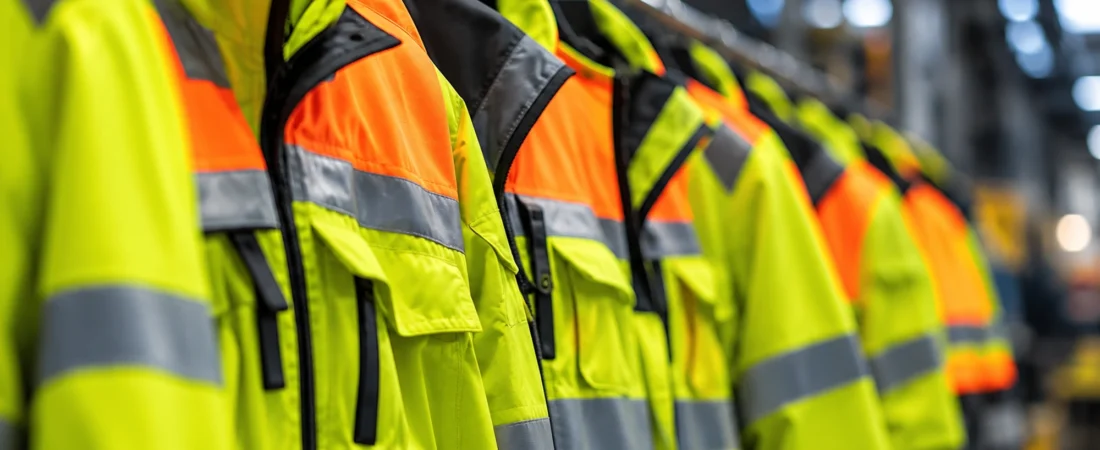
Hi-vis workwear is clothing that makes workers easy to see in day, night and low light. It uses bright fluorescent fabric for daytime and retroreflective tape for night. In Europe, hi-vis clothing is tested to EN ISO 20471. In the US, it follows ANSI/ISEA 107. Both standards sort garments into three classes based on how much visible material they have.
If you buy, sell or design hi-vis, getting the class, colour and tape right is not optional. It is what makes the garment safe and legal.
How Hi-Vis Clothing Works
Hi-vis uses two materials:
- Fluorescent background material: bright yellow, orange or red fabric that stands out in daylight
- Retroreflective material: tape that bounces light back to its source, such as car headlights at night
Both must meet minimum performance and minimum area rules for the garment’s class.
European Standard: EN ISO 20471
EN ISO 20471 is the main standard for high-visibility clothing in high-risk situations in Europe. It sets three classes by minimum area of visible material.
| Class | Fluorescent background | Retroreflective tape | Typical garments |
|---|---|---|---|
| Class 3 | 0.80 m² | 0.20 m² | Jackets with sleeves, coveralls |
| Class 2 | 0.50 m² | 0.13 m² | Vests, short-sleeve tops |
| Class 1 | 0.14 m² | 0.10 m² | Trousers, simple items |
The smallest size of a garment must still meet the area for its class. Colours allowed are fluorescent yellow, fluorescent orange-red and fluorescent red.
The standard is being revised. A draft of the new edition, published for comment in 2026, renames it “high visibility warning clothing for high risk situations”. For medium-risk work, Europe also has EN 17353 for enhanced visibility equipment.
US Standard: ANSI/ISEA 107
In the US, high-visibility safety apparel follows ANSI/ISEA 107. The new ANSI/ISEA 107-2026 edition revises the 2020 version. It updates references for flame-resistant apparel and adds guidance so non-fluorescent hoods do not cover required hi-vis materials.
ANSI/ISEA 107 uses types and classes:
- Type O: off-road work, such as warehouses and oil fields (Class 1)
- Type R: roadway and temporary traffic zones (Class 2 or 3)
- Type P: public safety, such as police and emergency responders (Class 2 or 3)
US federal highway rules require Class 2 or 3 garments for workers on federal-aid highways who are exposed to traffic.
Common Hi-Vis Garments
- Vests and tabards
- Polo shirts and t-shirts
- Sweatshirts and fleeces
- Jackets, parkas and softshells
- Trousers and bib trousers
- Rainwear, tested to EN 343 in Europe
- Coveralls
- Multi-norm garments that combine hi-vis with flame resistance
What Makes Hi-Vis Hard to Source Well
Hi-vis looks simple, but small changes can break compliance:
- Fluorescent fabric that fades after washing
- Cheaper retroreflective tape swapped in without approval
- Tape sewn in the wrong place or too short
- Logos that cover too much fluorescent area
- A size range where the smallest size misses the class minimum
That is why tested fabrics, locked tape suppliers and inspection at each stage matter.
Custom Hi-Vis Workwear
Custom hi-vis lets you add your brand, colours on non-hi-vis panels, extra pockets and special fits. Plan custom details early so the garment still meets its class. Read our guide on embroidered hi-vis workwear for branding for tips on logos.
Fit also matters. Read our guide to women’s hi-vis workwear to see why one cut does not fit all.
Sourcing Checklist
- Confirm the target standard and class for each garment
- Use fabrics and tape with valid test reports
- Lock the tape supplier, grade and width in the spec
- Check tape placement on pre-production samples
- Test colour and retroreflection after the wash cycles on the label
- Inspect tape position, labels and CE or ANSI marking at AQL before shipment
How Integrated Overseas Helps
Integrated Overseas manages hi-vis and FR workwear sourcing in India for EU, UK and US buyers. We work with partner factories experienced in protective clothing, coordinate lab testing and inspect fabric, tape and construction at every stage. See our wider workwear sourcing service.
Planning a hi-vis range? Talk to our team.
FAQs
What is the difference between EN ISO 20471 and ANSI/ISEA 107?
EN ISO 20471 is the European standard and ANSI/ISEA 107 is the US standard. Both set colour, tape and area rules, but the class areas and types differ.
What does Class 3 hi-vis mean?
Class 3 is the highest visibility class. It needs the most fluorescent and reflective material, so it usually has sleeves or covers the full body.
Can hi-vis be any colour?
No. Under EN ISO 20471, the background must be fluorescent yellow, orange-red or red. ANSI allows fluorescent yellow-green, orange-red and red.
How long does hi-vis clothing last?
It depends on use and washing. The label shows the maximum number of wash cycles tested. Replace garments that are faded, dirty or damaged.