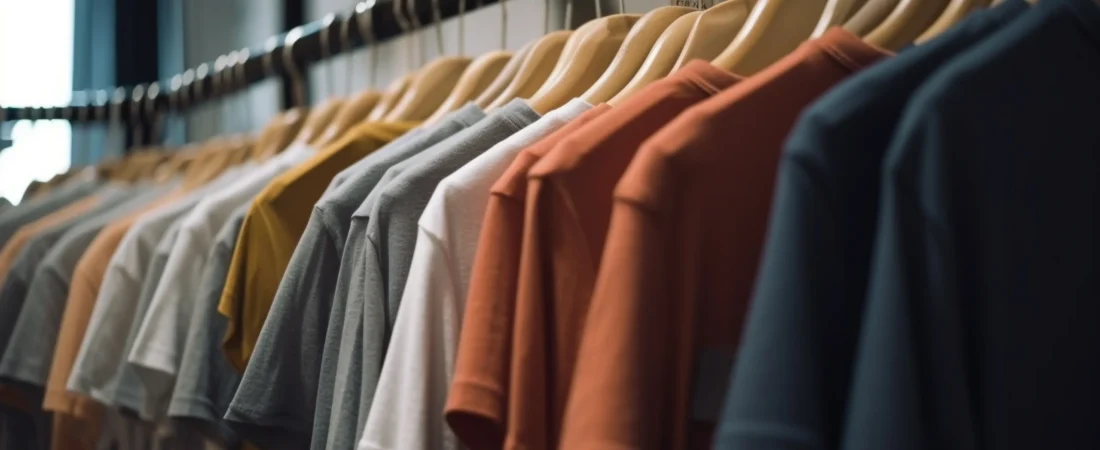
Private label clothing is clothing made by a manufacturer and sold under your own brand name. You choose the designs, fabrics and labels. The factory makes the garments to your specification. Retailers, uniform suppliers and new brands use private label to build their own line without owning a factory.
Done well, private label gives you control over quality, margin and brand. Done poorly, it gives you a warehouse full of returns.
What Is Private Label Clothing?
With private label, the product carries your brand, not the factory’s. You own the look, the labels and the customer relationship. The private label clothing manufacturer owns the machines and makes the goods.
Private label can mean:
- Your own designs made from scratch
- A factory’s base style changed to your spec, with your labels
- Core basics, such as tees and hoodies, in your colours and branding
Private Label vs White Label
| Private label | White label | |
|---|---|---|
| Design | Your own or heavily customised | Factory’s standard product |
| Exclusivity | Usually exclusive to you | Same product sold to many brands |
| Minimums | Higher | Lower |
| Brand control | High | Limited |
| Lead time | Longer | Shorter |
Step-by-Step: Launching a Private Label Line
1. Choose your product range
Start narrow. A few strong styles sell better than a big range with no focus. Pick products you understand and can describe clearly.
2. Build your tech packs
Create a tech pack for every style. Include sketches, measurements, tolerances, fabric, trims, artwork and label details.
3. Find the right manufacturer
Match each product type to a factory that already makes it well. Read our guide on how to find the best private label clothing manufacturers.
4. Develop fabric and trims
Approve fabric quality, weight and colour with lab dips. Approve zips, buttons, labels and packaging before bulk.
5. Sample and fit
Go through proto, fit, size set and pre-production samples. Test fit on real people in your target sizes.
6. Cost and order
Agree prices, minimums, payment terms and delivery dates in writing.
7. Check quality
Book a during production inspection for new styles and a pre-shipment inspection before the final payment.
8. Launch and reorder
Track sales and returns by style. Reorder winners and drop slow sellers.
Compliance Is Your Responsibility
When the label says your brand, the legal duty is often yours too.
- Labels: fibre content, care and origin must meet your market’s rules.
- Chemicals: follow REACH in the EU. Many brands use OEKO-TEX STANDARD 100 certified materials, which are tested for harmful substances.
- Kidswear: extra rules apply for cords, small parts and chemicals.
- Textile waste: EU countries must set up extended producer responsibility schemes for textiles by 2028. Brands placing clothing on the EU market will pay towards collection and recycling.
Choosing Where to Make Private Label
India is a strong base for cotton private label, including tees, polos, sweatshirts, loungewear, kidswear and denim. UK buyers now get zero duty on most Indian clothing under the India-UK trade deal, in force since 15 July 2026. Bangladesh and Vietnam also suit many private label programmes.
Tips for a Strong Private Label Programme
- Use the same fabric across styles to reach minimums
- Keep a golden sample for every approved style
- Write your AQL levels into every order
- Plan core colours for year-round replenishment
- Build long-term relationships with fewer, better factories
How Integrated Overseas Helps
Integrated Overseas manages private label clothing sourcing in India, from tech pack review to shelf-ready stock. We match knits, wovens, denim and sportswear to the right partner factories, manage fabric and sampling, and inspect every order with our own team. Our network also covers Bangladesh, Vietnam and Laos.
Planning your own line? Talk to us.
FAQs
What does private label clothing mean?
It means clothing made by a manufacturer but sold under your brand name, with your designs, labels and packaging.
What is the difference between private label and white label?
Private label is customised and usually exclusive. White label is a factory’s standard product sold to many brands with their own labels.
How much does it cost to start a private label clothing line?
Costs depend on styles, fabrics and minimums. Budget for samples, bulk production, inspection, freight, duty and marketing.
Who is responsible for compliance in private label?
Usually the brand placing the goods on the market. You must make sure labels, chemicals and safety meet the rules.